














What an Install Day Actually Looks Like
If you've never had an appliance installer in your home before, knowing what to expect makes the day go smoother. Here's roughly how a typical dishwasher install plays out from arrival to walkout.
Arrival and Walkthrough
Our installer calls or texts when they're on the way and arrives within the booked window. First thing on site, we look at where the dishwasher is going, the existing connections under the sink, and the cabinet opening. If anything looks off (an old shut-off valve that's seized, a drain configuration that won't work for the new model, an electrical setup that needs an electrician), we flag it before any work starts and walk through what it means for the install.
Disconnecting and Removing the Old Unit
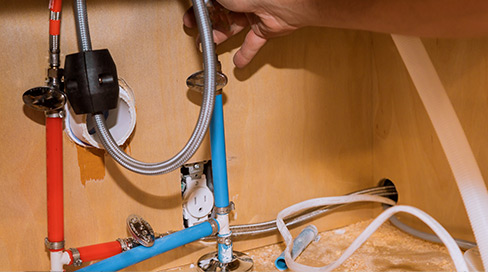
Water gets shut off at the supply valve, the supply line gets disconnected, the drain hose comes off, and electrical is unhooked. The old dishwasher gets unmounted from the underside of the counter and slid forward out of the cabinet. We use floor protection on hardwood and tile so nothing gets scratched during the move. Old units often fight a bit on the way out, especially if they've been in place for over a decade, but it's usually a smooth pull.
Fitting the New Dishwasher
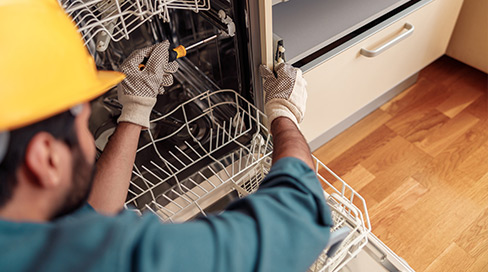
The new unit comes off its packaging, the supplied install kit gets opened, and we work through the connections in order: water supply, drain hose with a high loop, electrical, then the unit slides into the cabinet opening. The feet get adjusted to level the unit side to side and front to back. The mounting brackets get secured to the underside of the counter or to the side cabinets, depending on your countertop material.
Test Cycle and Walk-Through
Last step is running a full cycle while we watch for leaks at every connection point, listen for unusual vibration, and confirm the door seals properly when closed. The cycle usually takes 30 to 45 minutes and we wait for it to complete. Once the unit checks out, we go through the basics with you: how to load it, how to clean the filter, what to do for the first wash. The kitchen gets cleaned up before we leave.
Ontario Building Code Basics for Dishwasher Installs
A dishwasher install touches plumbing, drainage, and electrical, all of which fall under Ontario building code. A few of the rules that come up most often.
The High Loop in the Drain Hose
The drain hose has to rise to a high point under the counter before connecting to the disposal or air gap. This is the "high loop" and it stops dirty sink water from siphoning back into the dishwasher when the sink is in use. It's required by code in most jurisdictions and we route the drain hose accordingly during every install.
Dedicated Electrical Circuit
Modern dishwashers need their own 15-amp circuit. Sharing a circuit with the garbage disposal isn't code-compliant in most jurisdictions anymore, even though older homes routinely have that setup from when they were originally wired. If your existing wiring needs to be brought up to current code, an electrician needs to handle that work before we can complete the install.
Water Supply Lines
Current code calls for braided stainless steel supply lines on dishwashers. Older copper or plastic supply lines should be swapped out as part of the install since they're a common future leak point. The replacement is inexpensive and adds significant peace of mind given that supply line failures are one of the more common causes of kitchen water damage.
Air Gap or High Loop
Some jurisdictions require an air gap fitting on the countertop instead of (or in addition to) the high loop. Air gaps are a small chrome cylinder visible on the counter near the sink that prevents drain backflow. Whether your install needs one depends on the local plumbing code, and we confirm what applies before routing the drain.
Caring for Your New Dishwasher
The first few weeks set up how the unit performs over its life. A few habits early on go a long way toward keeping the dishwasher running well for the next decade.
Run a Cleaning Cycle Early
Most manufacturers recommend running an empty cycle with a dishwasher cleaner (Affresh, Finish, or a citric acid tablet) within the first week. It clears any manufacturing residue from the tub and spray arms. After that, a monthly cleaning cycle keeps mineral and detergent buildup under control, which matters more than people realize given the moderately hard water across West Gwillimbury and surrounding areas.
Keep the Filter Clean
Modern dishwashers have a removable filter at the bottom of the tub that catches food particles. Pulling it out and rinsing it under the tap every few weeks prevents drainage problems and keeps the wash performance high. The exact filter location and removal method varies by manufacturer, so check the owner's manual or ask us to walk you through it during the install.
Use Rinse Aid
Rinse aid matters in this region because of the hard water. Without it, dishes come out spotted with mineral residue even when the dishwasher is otherwise working perfectly. Most units have a small reservoir for rinse aid that needs to be topped up every month or two. The little extra cost is worth it for what it does to glassware.
Don't Skip Pre-Rinsing Logic
Modern dishwashers don't actually need dishes pre-rinsed, the detergent and the unit's enzymes are designed to work on real food residue. But scraping off larger food chunks before loading helps the filter and the drain pump last longer. There's a difference between rinsing dishes spotless (unnecessary) and clearing visible chunks (worth doing).