










Replacement Installs vs. First-Time Installs
Most of our installs fall into one of two camps: replacing an old dishwasher, or putting one into a kitchen that has never had one. The work involved is quite different in each case, so it helps to know which one you're dealing with before we arrive.
Replacing an Existing Dishwasher
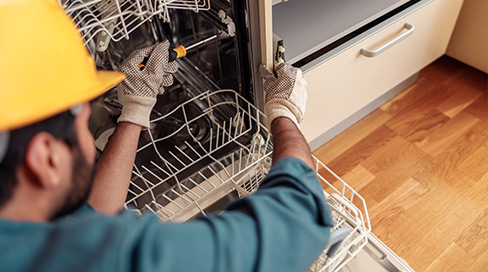
This is the bulk of what we do. The cabinet opening, water supply, drain connection, and electrical wiring are already in place from the old unit. Our job is to disconnect the old dishwasher, get it out of the cabinet without scratching your floors or scuffing the surrounding millwork, and put the new unit in its place. Most jobs wrap up in two or three hours including the test cycle at the end. If the new dishwasher is a different brand, we sometimes need to make small tweaks to the supply line or drain hose because connection points aren't always in the same spot, but it's rarely a problem.
First-Time Dishwasher Installation
If your kitchen has never had a dishwasher, expect a bigger project. We help you figure out the right cabinet space (almost always next to the sink for plumbing reasons), then coordinate with a plumber for the water and drain lines and an electrician for a dedicated circuit if you don't already have one. Once that rough-in work is done, we come in to fit, mount, and connect the dishwasher. Plan it ahead rather than rushing it, because the trades involved tend to book up.
How to Prepare for Installation Day
Five minutes of prep before we arrive makes the visit faster and avoids surprises. A few things to do before we get there.
Empty the Old Dishwasher
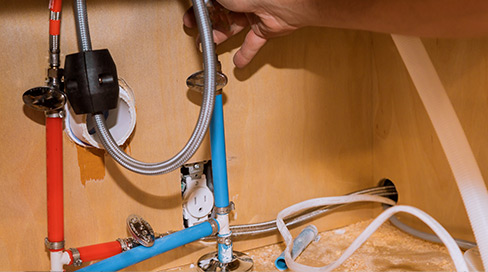
Pull out any dishes, the racks, the utensil basket, anything sitting on top of or next to the unit. We're going to slide the old dishwasher straight out of the cabinet, and anything still inside will rattle around or fall out during the move. Take a minute to clear the area under the sink too, because we'll need to get at the supply valve and drain connections.
Clear a Path to the Kitchen
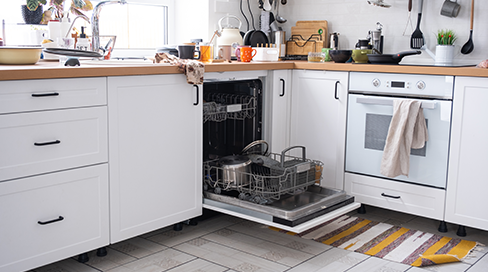
Old dishwashers usually weigh around 70 pounds. Newer ones with stainless steel tubs can hit 100 pounds. We need a clear path to carry the new unit in and the old one out, so move any kitchen mats, runners, or furniture that's in the way before we get there. It saves time and keeps your floors safe during the move.
Have the New Dishwasher Ready
We can unbox it when we arrive, but if you've already done that and checked it for shipping damage, we get started faster. Keep all the paperwork together with the unit, especially the installation kit, mounting brackets, and the manufacturer's instructions. That kit usually contains the specific parts we need to hook into your water and drain setup.
Find the Hot Water Shut-Off
The hot water supply valve sits under the kitchen sink and we'll need to use it. If you've never actually closed it before, it's worth testing that it shuts off cleanly. Older valves can seize in the open position, and we'd rather catch that before installation day than discover it once we're already disconnected from the old dishwasher. If yours is stuck, you'll likely need a plumber to swap the valve before we can wrap up safely.
Choosing the Right Dishwasher for Your Kitchen
If you haven't bought the new unit yet, a few decisions affect both performance and how cleanly the install goes. The questions we hear most often:
24-Inch vs. 18-Inch Compact
Most Ottawa kitchens have a standard 24-inch cabinet opening for the dishwasher. Eighteen-inch compact units show up in downtown condos and smaller kitchens where counter space is tight. Going from 24 to 18 (or the other way) means cutting or filling the cabinet opening, which adds carpentry work to the install. If you can match the new unit to the existing opening, you'll save yourself the extra step.
Panel-Ready and Built-In Models
Higher-end dishwashers from Bosch, KitchenAid, and Miele are often sold panel-ready. The front of the unit accepts a custom cabinet panel so the dishwasher disappears visually into the surrounding millwork. Fitting and aligning that panel takes more time and precision than a standard install, and you'll need the custom panel built by your cabinet maker or a millworker before we arrive. Worth coordinating the timing if you're going this route.
Hard Water in Ottawa
Ottawa's tap water runs moderately hard, which causes mineral buildup inside dishwashers over time. If you're shopping for a new unit and have the option, models with built-in water softening (Bosch, Miele, and a few higher-end Whirlpool lines have it) tend to last longer and clean better in this region. It's not essential, but worth weighing if you're comparing two units that are otherwise similar.